What should you know before trading meme coins if you want to avoid the mistakes that wipe out most new portfolios?
Want articles like this for your own video to promote it on YouTube and Google? Order them through the Telegram bot @sat_sit_bot. It writes articles around your video, embeds the video and publishes them on popular niche websites (no ads). Try it free: 50 articles on us.
· based on the channel rasmr
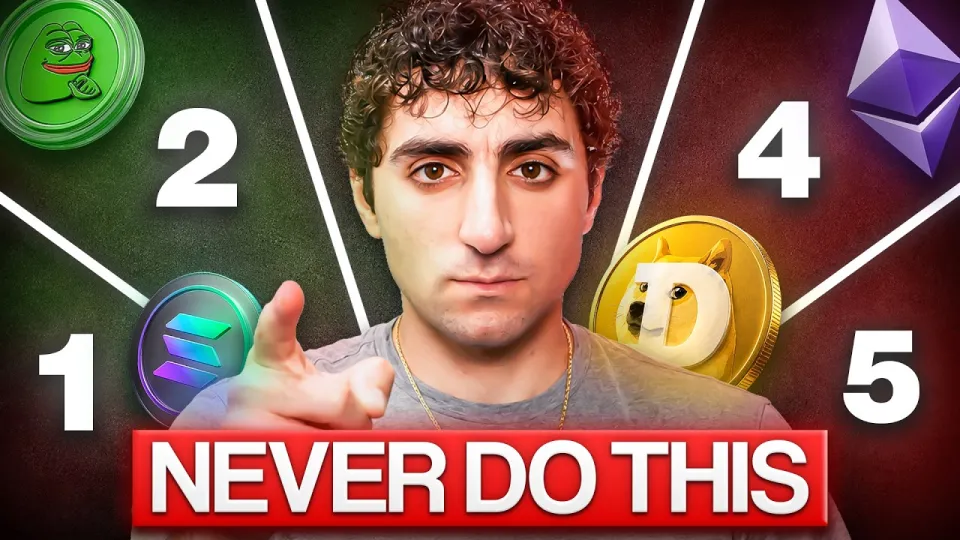
Meme coin trading is a patience and risk-management game, not a hunt for the next 100x: the traders who survive treat every meme coin as a lottery ticket with a fixed price, size positions so a total loss is survivable, and wait for consolidation instead of chasing a green candle. That single shift in mindset separates people who compound small gains from people who hand back their whole portfolio in a week. The breakdown below follows the lessons in rasmr's video "5 Things I Wish I Knew Before Trading Memecoins (Learn From My Mistakes)", and if you want to trade alongside the channel's setup you can register on FOMO through rasmr's referral link.
Why meme coin prices behave nothing like normal crypto assets
A meme coin has no revenue, no roadmap obligation and usually no product, so its price is a pure function of attention, liquidity and the order book. Bitcoin and large-cap tokens at least have halving cycles, ETF flows and institutional positioning to anchor a thesis; a meme coin has a community, a ticker and a pool of liquidity that can be pulled. That is not a reason to avoid the sector, but it is a reason to stop applying fundamental logic to it.
What actually moves these tokens:
- Attention spikes — a mention from a large account, a listing, a viral clip. Price gaps up before most people can react.
- Liquidity depth — thin pools mean a modest sell order can move price 20–30% against you, so your exit is worse than your screen suggests.
- Holder concentration — when a handful of wallets hold a large share of supply, one of them selling is the whole exit liquidity story.
- Narrative rotation — capital rotates between themes (dogs, frogs, AI agents, political tokens) within days, and yesterday's leader is often today's dead chart.
Because of this, position sizing and exit rules matter more than the quality of the joke. A funny ticker with a bad entry is still a losing trade.
The five mistakes that cost new meme coin traders the most
Almost every blown meme coin account traces back to the same five errors, and each one is fixable with a rule rather than with better prediction. rasmr frames them as things he wished he had known before trading, which is exactly the point: they are learned the expensive way by default.
- Chasing the vertical candle. Buying after a token has already run 200–500% means you are the exit liquidity for earlier buyers. The move you see on the chart is the move you missed.
- Sizing like it is a blue chip. Putting 30–50% of a portfolio into one meme coin turns a normal -60% drawdown into an account-ending event. A position you cannot afford to lose entirely is too large.
- No pre-set exit. Traders who do not decide in advance where they take profit and where they cut usually do neither, and ride a winner back to zero.
- Trading out of boredom. Quiet markets push people into random entries just to feel active. One widely liked comment under the video describes exactly this: losing an entire portfolio in a bear market simply because there was nothing else to do.
- Trusting a chart with no liquidity check. Before entering, look at pool size, holder distribution and whether trading is enabled. A beautiful setup on a token you cannot sell is not a setup.
The common thread is that none of these mistakes require bad luck. They are structural, which means they can be designed out.
How to size a meme coin position so one loss cannot end you
Risk per trade should be a fixed, small percentage of the portfolio, decided before you look at a chart, so that no single token can change your financial situation. A workable framework for most retail traders:
- Cap single-token exposure at 1–5% of the portfolio. If the token goes to zero, you lose that slice and nothing more.
- Assume total loss, not a drawdown. Meme coins routinely fall 80–99% and never recover; plan for zero, and any partial recovery is upside.
- Scale in, do not all-in. Splitting an entry into two or three buys across a consolidation range smooths your average and removes the pressure to nail one price.
- Keep a cash buffer. Dry powder is what lets you take the next setup instead of watching it from a fully invested account.
- Write the invalidation level first. If price hits it, you exit, regardless of how good the community feels that day.
This is unglamorous, and it is the reason the traders who last a full cycle are rarely the ones with the biggest single win screenshots.
When to buy a meme coin and when to wait
A consolidation range after an initial spike is generally a better entry than the spike itself, because the risk-to-reward is defined and the crowd has stopped chasing. One viewer asked precisely this: whether to buy during consolidation or wait for confirmation such as good news. The practical answer is that you buy structure, not headlines.
A simple checklist before any entry:
- The token has already had its first explosive move and is now ranging sideways on declining volume.
- The range has a clear floor that has been tested at least twice without breaking.
- Liquidity is deep enough that your position is a small fraction of the pool.
- Holder distribution is not dominated by a few wallets, and the deployer's share is not sitting on the book.
- You have a defined stop below the range and a defined target above it.
If those conditions are not met, the correct action is to wait. Waiting costs nothing; a bad entry costs the position. The same logic applies to news: by the time a headline reaches you, the move it describes has usually already happened, and buying it is buying someone else's exit.
Common questions new meme coin traders actually ask
New traders tend to ask the same handful of questions, and the honest answers are less exciting than the marketing. Beginners in the comments describe having made most of these mistakes within their first month, which is normal — the goal is to make them with small size.
The recurring themes are: how much of a portfolio belongs in meme coins at all (for most people, a speculative sleeve they can lose entirely), whether to hold a winner or take profit (partial profit-taking is how you convert a paper gain into a real one), how to spot a token you cannot sell (check the pool and whether sells are enabled before buying), and how to recover after a bad start (cut size, slow down, and rebuild with rules rather than with revenge trades). None of these have a clever trick answer; they have a discipline answer.
What a realistic meme coin trading routine looks like
A routine beats a hot tip, because the market will not always hand you a good setup on the day you feel like trading. A workable weekly process looks like this: scan for tokens that have already spiked and are now consolidating, check liquidity and holder distribution on the ones that pass, size the position at a fixed small percentage, set the invalidation level before entering, and take partial profit on the way up rather than waiting for a number you picked emotionally. Then log the trade — entry, exit, reason — so that after twenty trades you have data instead of memories.
Conclusion
The core lesson from rasmr's walkthrough is that meme coin trading is survivable if you treat it as risk management with a entertainment wrapper: size small, buy consolidation instead of candles, define exits in advance, and never trade to cure boredom. The channel's value is that it is built on mistakes already made rather than on hypotheticals, which makes it a useful counterweight to the hype cycle. If you want to put these rules into practice, you can sign up on FOMO with rasmr's referral link and start with position sizes you can genuinely afford to lose.
Key takeaways
- Meme coins are sentiment-driven tokens with no cash flow, so price is set by attention and liquidity rather than earnings or fundamentals.
- Most new traders lose because they buy after a vertical move, size positions too large and hold through the first drawdown instead of cutting it.
- A practical rule is to risk only a small fixed share of the portfolio per trade, so a full loss never changes your overall plan.
- Consolidation after a spike, not the spike itself, is where risk-to-reward is usually best for an entry.
- Boredom trading in a quiet market is a recurring cause of blown accounts, as traders admit in the comments under rasmr's breakdown.
Source: 5 Things I Wish I Knew Before Trading Memecoins (Learn From My Mistakes) · Markdown version
Questions & answers
How much of my portfolio should go into meme coins?
Treat meme coins as a speculative sleeve you can afford to lose entirely, and cap any single token at roughly 1–5% of the portfolio. That way a total loss on one trade is an inconvenience rather than a setback you need to recover from. The sleeve size depends on your overall risk tolerance, but it should never be money you need for anything else.
Should I buy during consolidation or wait for news confirmation?
Buying a defined consolidation range after the first spike usually offers better risk-to-reward than chasing the spike itself, because the floor and invalidation level are visible. Waiting for news confirmation often means buying after the move has already been priced in. Structure and liquidity are more reliable signals than headlines in this sector.
Why do so many traders lose money on meme coins?
Most losses come from a small set of repeatable errors: entering after a vertical move, sizing too large, having no pre-set exit, and trading out of boredom in a quiet market. None of these require bad luck, which is why they can be fixed with rules. Position sizing alone removes the most common account-ending scenario.
How do I check whether I can actually sell a meme coin?
Before buying, look at the liquidity pool size, the holder distribution and whether selling is enabled for all holders. If a few wallets control a large share of supply or the pool is thin, your exit may be far worse than the chart suggests. A token you cannot sell at a fair price is not a trade, it is a donation.